November 20, 2026 · Lisa, content editor
When should you start reading to your baby? Sooner than you think
By Lisa, mum of two and content team member at Kids Chapters
Reading to your baby can feel a little silly at first. You sit there with a board book, your little one chews the corner of the page and stares at the ceiling, and you wonder who exactly this is for. I asked myself the same thing with both of mine. The answer is that it is worth it, and you can start much earlier than most parents think. We even see it in the way parents order from us.
What our orders tell us about starting early
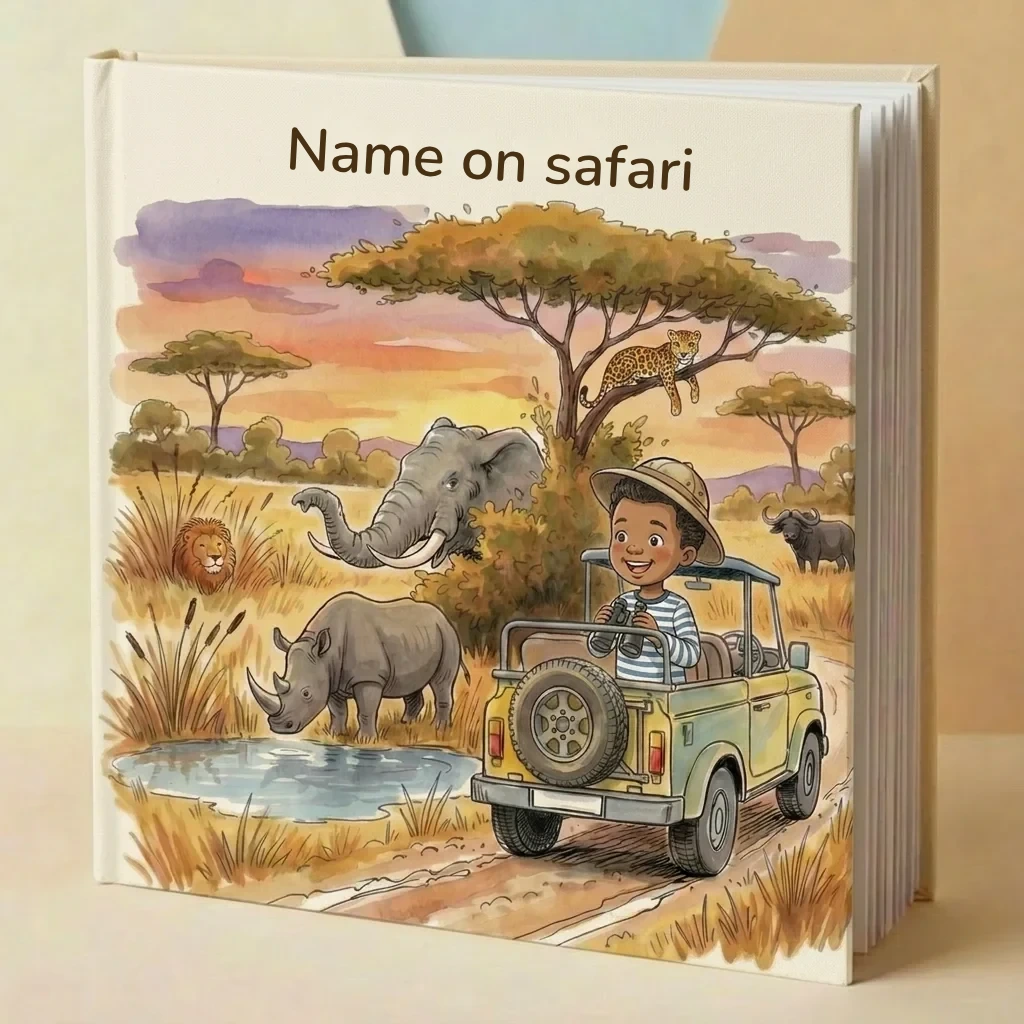
Our safari book is written for children from 0 to 4. Of the orders where parents fill in an age, 81% are for a child who is 0, 1 or 2. Across all our books it is 53%, even though most of them are aimed at children of three or four and up. And that is before counting our baby alphabet book, which is made for the very youngest anyway.
This is a small group of parents, so it is not research. But the pattern is clear: parents are not waiting until their child can follow a story. They simply start. And they are right to.
When should you start reading to your baby?
In the first few months. You do not need to wait for anything. In the Netherlands, where we are based, libraries hand parents a first bag of baby books at around three months through a programme called BoekStart. When researchers Adriana Bus and Merel de Bondt followed those babies years later, the children who had started early scored substantially better on a national language test at school than similar children who had not taken part. An earlier study had already found a language head start at fifteen months.
What I found striking is their explanation. It was not that these parents went on to read more later. Their suspicion is that the early start itself lays a solid foundation.
Quantity matters too. In 2019, researchers at Ohio State University estimated how many words children hear from books before they start school. A child who hears one book a day will have heard around 300,000 words from books by age five. A child who is almost never read to hears fewer than 5,000. These are estimates, but the gap is so large that the exact figures hardly matter.
At first, it is not about the story
This was the hardest part for me to let go of. A four month old does not follow a plot. The Dutch reading foundation Stichting Lezen is honest about it: reading to children under about two asks a lot of parents, because the little ones cannot follow the story yet and do not say much back.
So what does a baby get out of it? Your voice. The rhythm of short sentences. Words you rarely use in everyday chat, like savannah or horizon. And above all, repetition. Parents also talk more with their child while reading than during other kinds of play. The book is really an excuse to have a conversation.
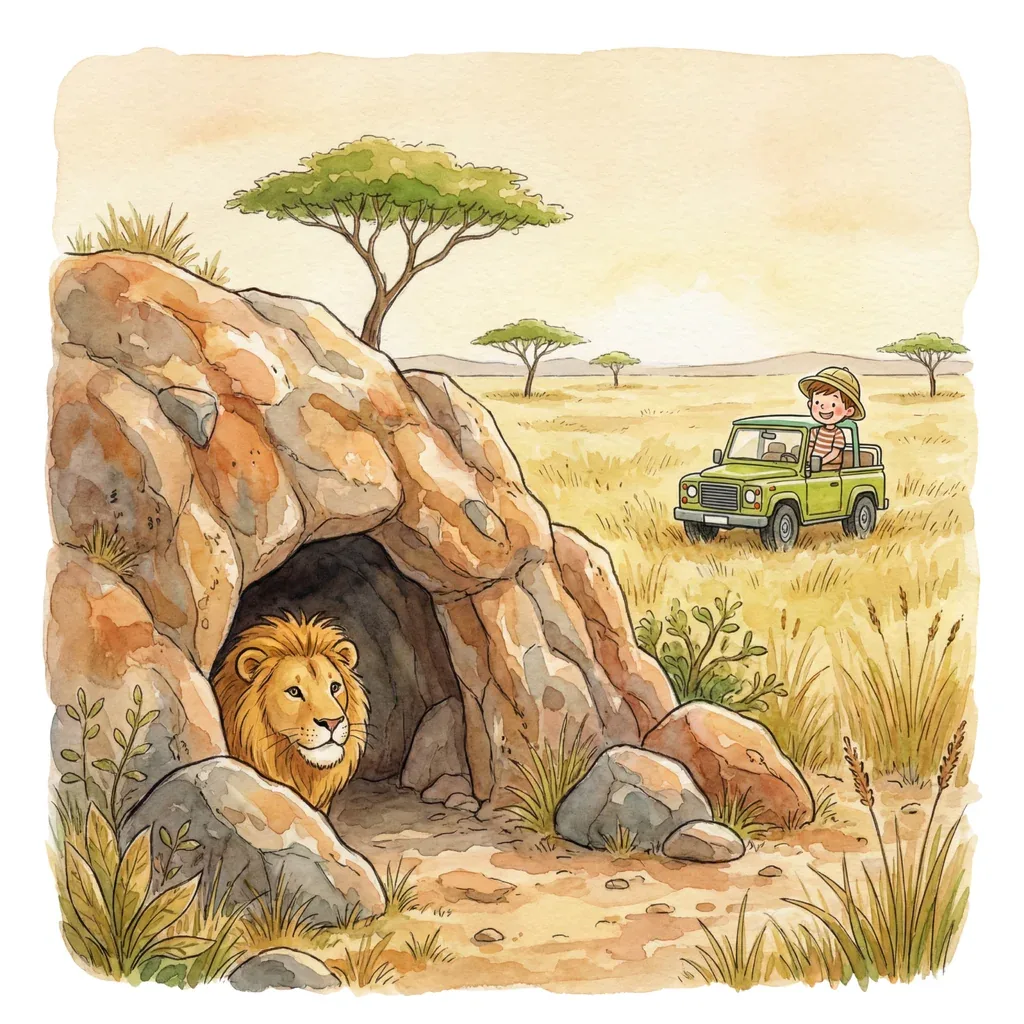
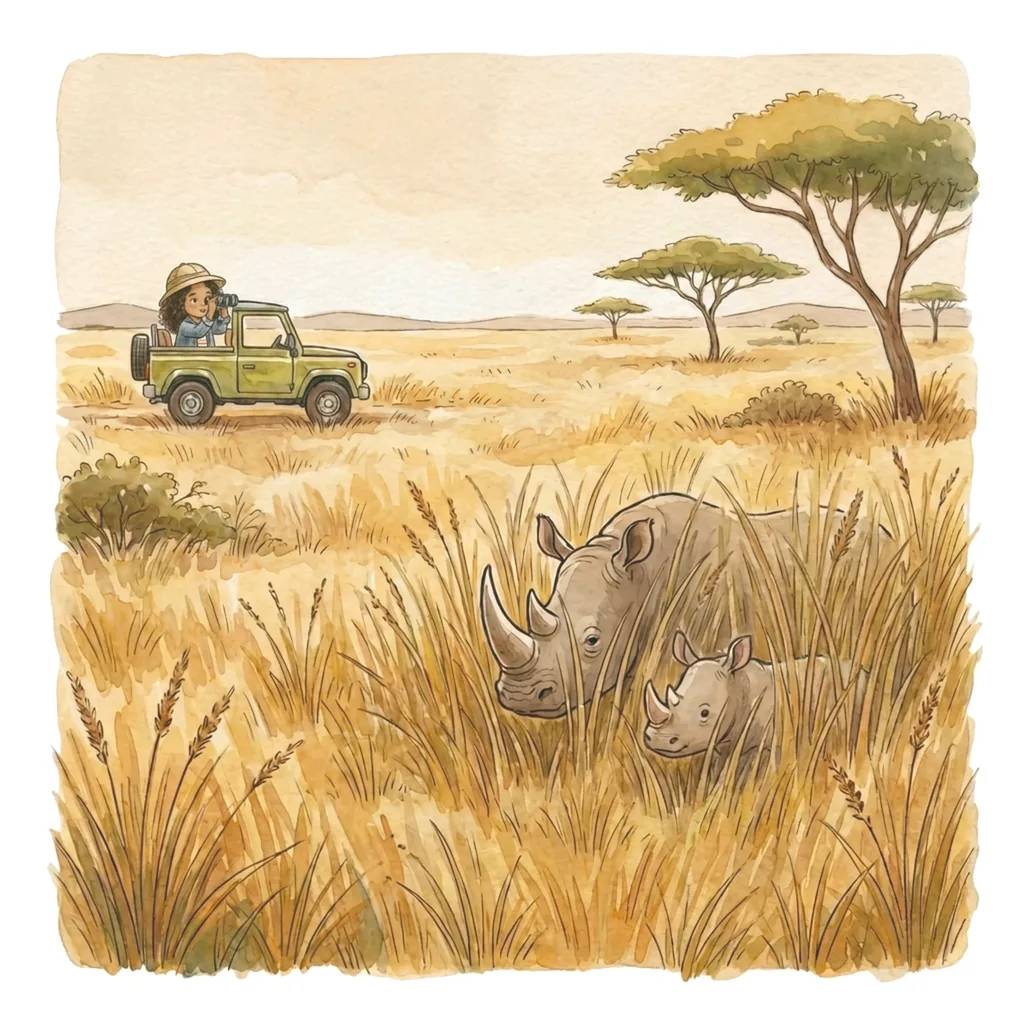
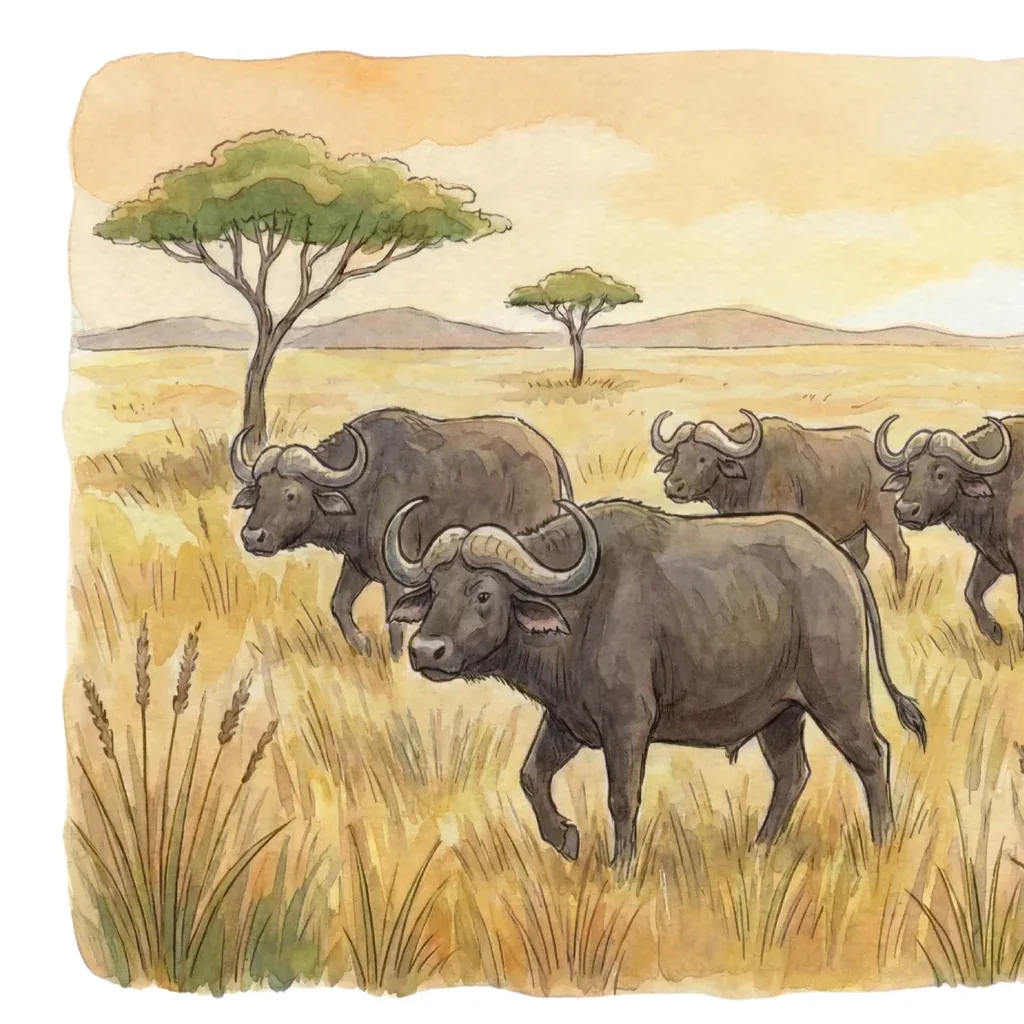
When we wrote our safari book, we kept exactly that in mind. The whole story is around two hundred words, about 26 per page. The same question, "Whose snout is that?", comes back five times, and each animal answers with its own sound: a growl, boom boom, toot toot. After a few readings, an eighteen month old will whisper the question along and wait for the noise that comes next.
Reading to your baby, stage by stage
This is not a plan to follow to the letter, just what worked with my own two and with friends.
The first months. Pick books with big, clear pictures and strong contrast. Read the words, or just talk about what you see. Your baby is listening to your voice, not the text. A few minutes is plenty.
Around six to twelve months. Grabbing, chewing and page turning begin. Let it happen, that is what sturdy board books are for. Point at things and name them. Make the animal noises. Stopping halfway is completely fine.
From one to two. This is when repetition really pays off. Your toddler wants the same book again and again, and that is a good thing: it is how they learn to predict what comes next. Ask a question and leave a pause. Let them make the sound or point at the picture.
Why their own name makes a difference
One of the first words a baby recognises is their own name. When that name turns up in a story, something happens. With my two it was the same every time: a moment of stillness, then they looked up, then a huge grin.
That is also why parents order a book for a child who cannot talk yet. The baby will not read it. But it becomes the book they point at a few years later because they recognise themselves in it. And the dedication at the front, which 97% of parents fill in, is there for when that child is much older.
So just start, even if it feels like you are reading to the ceiling. A few minutes a day is enough, and the board book with the chewed corner is often the best one on the shelf. Curious what a story about your own child looks like? Browse our books and find the one that fits your family.